Outcome-Driven
Context Modeling.
Take back control of your value streams: model the outcomes you need and the interactions required to reach them — what, not how. The result is a single, outcome-driven model the whole business can own.
We stopped owning
our own value streams.
As business people, we keep feeling unable to own the design, implementation, and execution of our own value streams. Automation is one cause — technical experts tell us what can and can’t be done, and we’re handed solutions that only partly deliver the outcomes we asked for.
But it isn’t only automation. Organisational silos, starved of transparency, quietly frustrate every attempt to streamline — or inject delays because the right knowledge isn’t in the right place.
Politics will never fully leave organisations, and with AI, automation only becomes more central. So the answer isn’t to fight either — it’s to change what we model. We focus on what we want to achieve and the interactions required to achieve it. Define the outcomes first and you create a clear target for value; model the interactions from that outcome-driven perspective and you strip out the bias that comes from assuming today’s processes and tools.
Because none of this requires specialist knowledge, it removes the communication barriers between business and technology teams and replaces them with continuous collaboration — and the trust and engagement that follow.
Three shifts that
change everything.
Define success before you start. Anchoring on outcomes keeps every interaction tied to measurable value.
- ✓ Find the real scope of change
- ✓ Avoid scope creep and misaligned priorities
- ✓ Trace every effort back to a business result
Stay agile and unbiased by describing what must happen rather than jumping into solution mode.
- ✓ Remove early bias from decisions
- ✓ Keep options open for innovation
- ✓ Pivot quickly as the market shifts
One model aligns teams and gives AI precise, bounded context it can actually act on.
- ✓ Faster, clearer collaboration
- ✓ Reliable decision automation
- ✓ Grounded, higher-fidelity context
Eight steps, from
outcome to execution.
The model is built backwards from the result — outcomes first, mechanics last.
Define outcomes and metrics
Start by articulating the outcomes a capability must produce — and there is rarely just one. An outcome is an observable change in the attitude or behaviour of people: customers, employees, or other stakeholders. If nothing changes, no value — good or bad — was created.
Defining outcomes this way keeps the focus on real-world impact, not outputs or deliverables, and gives every downstream activity a measurable target.
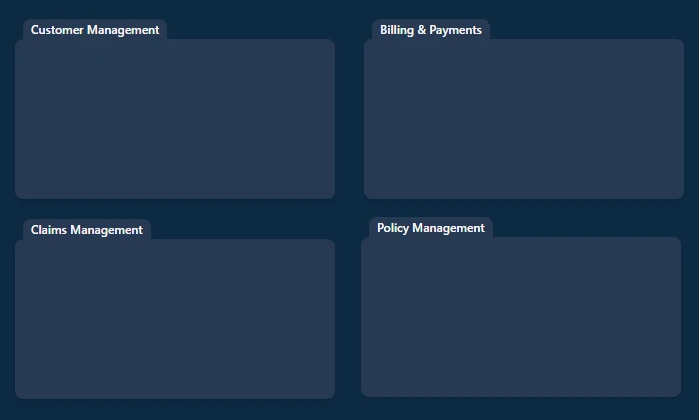
Identify the capabilities that deliver those outcomes
The first capability you find is usually core to why the organisation exists — a product or a service. If your outcomes point only at a supporting capability, that is a signal you have not found the real outcome yet; supporting capabilities exist to improve the core value stream.
Each capability is a domain of knowledge — a distinct context, with its own language and expertise.
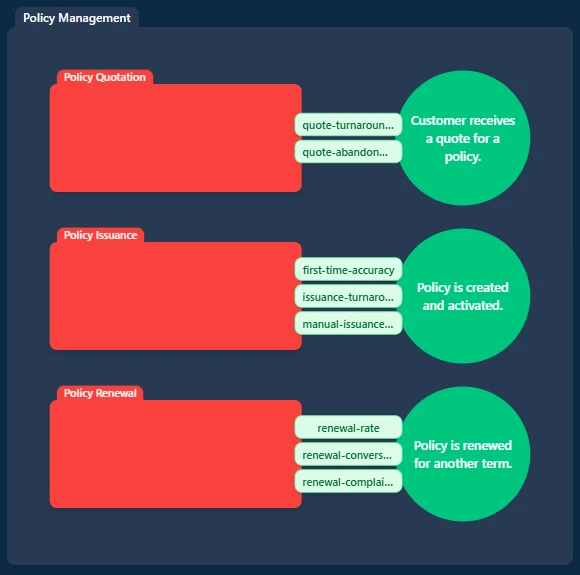
Identify the activities — and their metrics
The processes inside a context are activities; their individual outcomes combine to deliver the capability’s outcome. Once an activity’s outcome is clear, KPIs show how well you are progressing toward it — evidence of what is working and where the gaps are.
Reading that data in the context of each capability tells you exactly which activities to introduce, improve, or scale, so effort lands where it has the most impact.
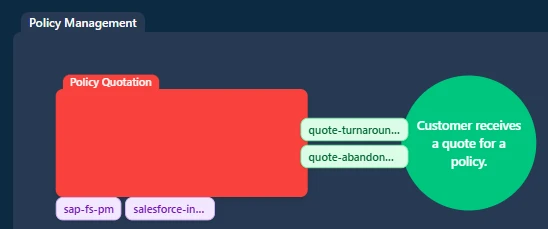
Identify the systems each activity consumes (optional)
Most activities rely on systems — applications, platforms, infrastructure. Mapping which systems serve which activities clarifies dependencies and integration points and surfaces opportunities to automate.
It also connects business activities to the underlying technology services that support them, so technology investment lines up directly with value delivery.
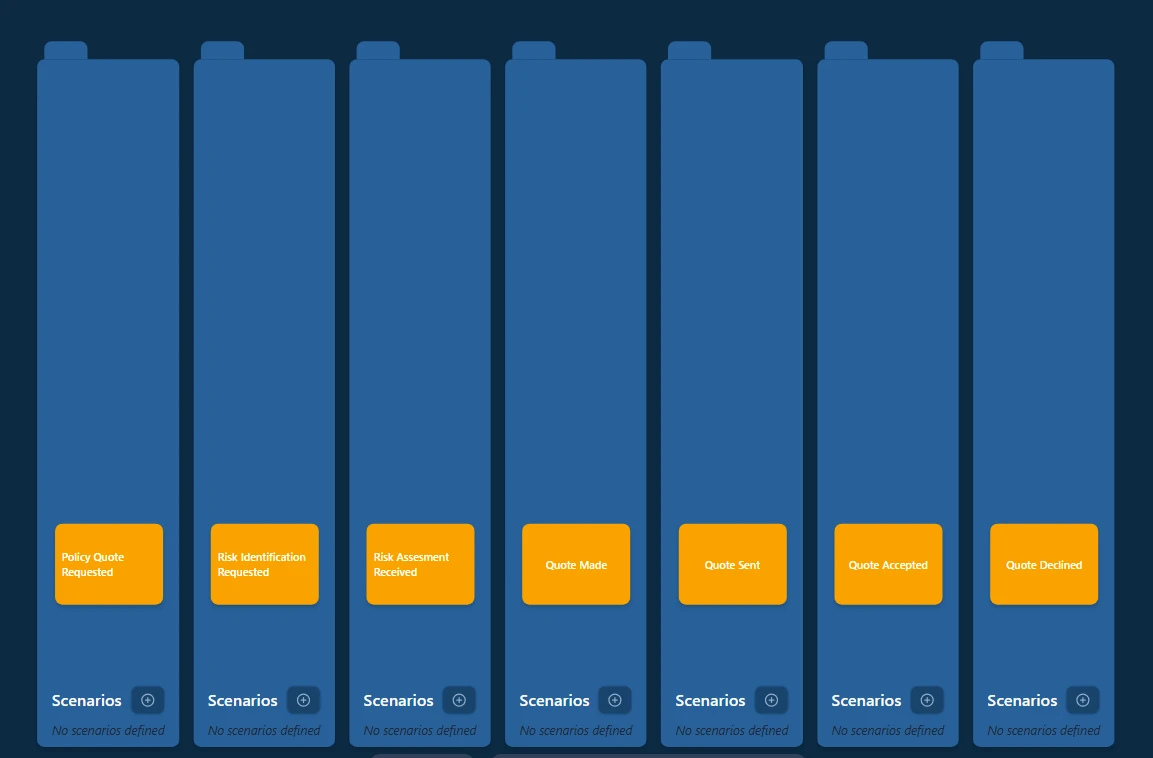
For each activity, discover the interactions that produce its metrics
Delivering an activity means interacting with other systems and people — and those interactions are where performance is made and measured.
The critical discipline: do not describe how an interaction happens. Describe the outcome of the interaction between two systems, in the past tense — “application submitted,” “payment captured.” That single rule is what keeps the model unbiased and implementation-agnostic.

Move to operational specifications: the slice
The outcome model places each interaction outcome inside a slice — a self-contained unit that holds everything required to produce that outcome. Here you identify the new or updated facts the interaction should leave behind.
This is usually the moment you discover missing interaction outcomes and fold them back into the model.
Apply the interaction pattern
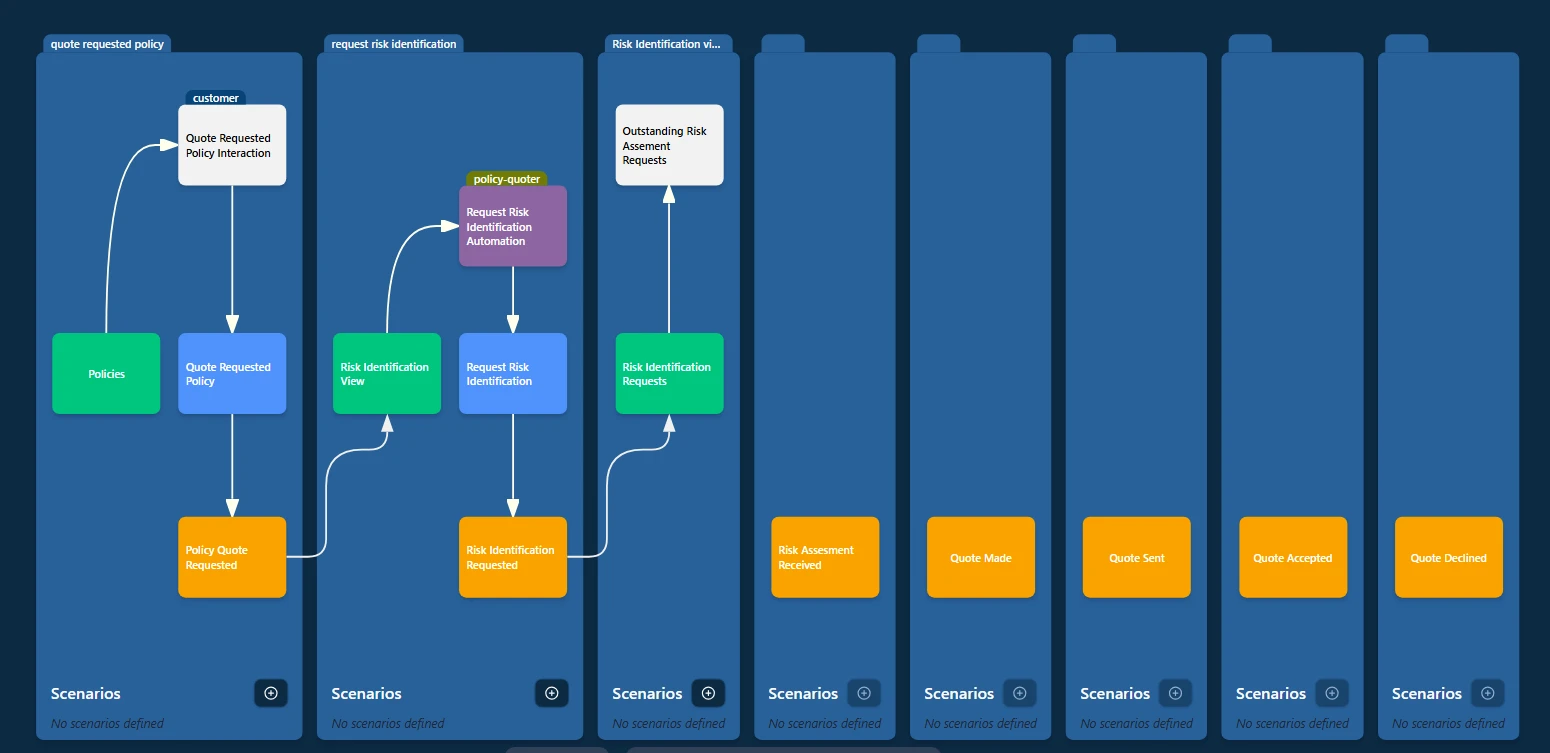
This is where the approach gets its simplicity — there are only three patterns:
- Interaction — add new information to the system.
- Automation — listen for relevant outcomes and decide whether a follow-up action is required.
- View — present the current state of one or more systems.
The arrows in the model automatically validate that every fact a slice needs is available — exposing any dependency on outcomes in other activities or contexts.
Capture the scenarios within each slice
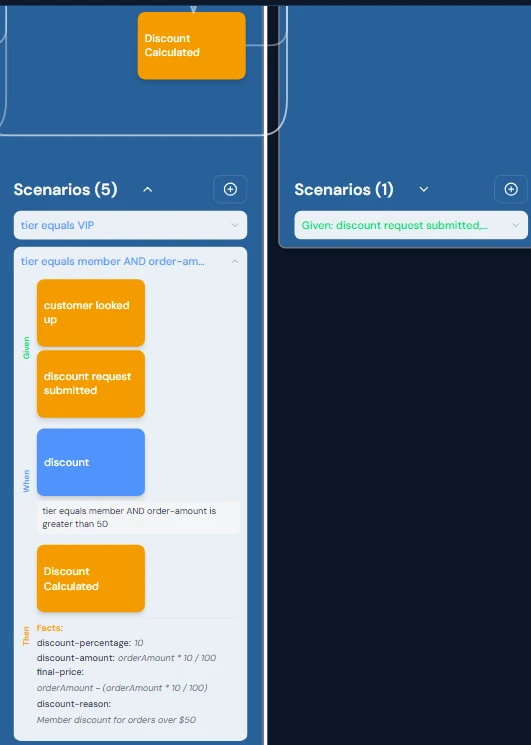
A single interaction rarely has just one path. A scenario is a Given / When / Then branch through a slice: given certain facts are present, when its business rules hold, then a specific outcome is produced.
This is where the decision logic lives — the same interaction can resolve to different outcomes (approved vs. declined, eligible vs. not), each with its own rules and, where needed, its own fact calculation. Capturing every scenario makes the slice’s behaviour explicit and complete: the model now states not just what outcome is wanted, but under which conditions each variant fires.
A shared model the whole
business can own.
Because the model describes outcomes and interactions — not solutions — it stays free of specialist jargon. Business and technology read the same picture, which removes the communication barriers between them and replaces hand-offs with continuous collaboration. That is what restores ownership of the value stream: a shared, outcome-driven model everyone trusts.
And because every interaction outcome is captured as a precise, bounded slice, the model is as legible to an AI agent as it is to a person — intent preserved, ready to act on.
Curious how Model My Context turns this model into governed, executable skills? See how it works, or read the blog.